The Return of IRL: 5 Questions with Faulhaber’s Margot James on the Future of Experiential Marketing
-
categoryfxm
-
authorMargot James
-
dateApril 9th, 2026
In an era defined by algorithms, feeds and constant scrolling, one of the biggest cultural trends right now might actually be going analogue.
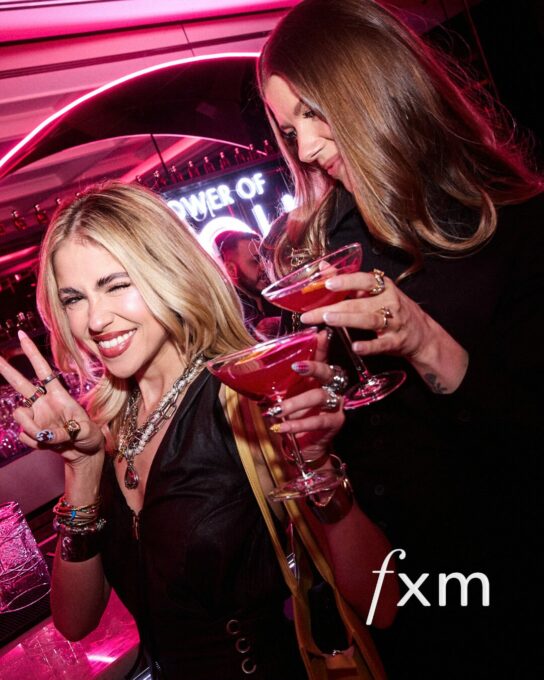
Consumers are increasingly drawn to experiences that feel tangible and communal: moments where people can gather, connect and engage with brands in real life. From supper clubs to community runs and creative pop-ups, there’s a renewed appetite for experiences rooted in real connection. In many ways, the most compelling brand moments today are happening offline (or at least beginning there).
For brands, this shift presents both an opportunity and a challenge. Real-world experiences can create powerful emotional connections, but they also need to extend beyond the room – generating conversation, coverage and content that carries the story further.
At Faulhaber, that thinking sits at the centre of fxm, our experiential marketing division, which works alongside our PoweredPR® model to ensure real-world experiences are designed not just to engage guests, but to drive broader earned impact.
We spoke with Margot James, Director of fxm, about how experiential marketing is evolving and how brands can design moments that feel authentic, culturally relevant, and strategically powerful.
Experiential marketing has evolved dramatically over the past few years. What are the biggest shifts you’re seeing in how brands are using events and real-world experiences today?
We’re seeing a major shift in both creator and consumer appetite away from highly produced, hyper-curated experiences and toward more grassroots, community-driven, and analogue moments.
It’s become less about capturing the perfect Instagram photo and more about slowing down to foster connection and strengthen relationships.
The most successful brands today understand that they shouldn’t always be the “main act.” Instead, they need to authentically fit into the lifestyles and communities of their audience.
At Faulhaber, fxm isn’t just about producing events, it’s designed to work alongside PoweredPR®. Why is it so powerful when experiential marketing and earned media strategy are built together from the start?
As attention spans continue to shrink, message cut-through becomes much more difficult. Many marketers reference the “Rule of 7,” the idea that audiences typically need to encounter a message multiple times before it resonates. The same principle applies to brand storytelling across media, influencers and experiential moments. When those touchpoints are intentionally designed to work together, from earned media to creator partnerships to in-person experiences the message becomes stronger, more memorable, and ultimately more effective.
In today’s landscape, brands have more channels than ever to reach audiences. What makes a real-world experience still one of the most powerful ways to build connection and attention?
Social media continues to play an incredibly important role, but IRL experiences create a level of intimacy and connection that simply can’t be replicated online. Consumers are increasingly looking for ways to actively engage with brands rather than just observe them passively. Real-world experiences allow for that dialogue. And of course, there’s something powerful about being able to touch, feel, and experience a product in person. It creates a different level of trust and memory.
What are some of the most effective ways brands can design experiences that generate not only great moments for guests, but also meaningful media coverage and content?
The most successful experiential moments are designed with storytelling in mind from the very beginning. That means identifying the narrative or cultural insight that will resonate with media and creators, not just the event format itself. When experiences are built around a clear story, strong visual moments, and intentional guest lists that bring together media, creators and consumers, they naturally generate content and coverage that extends well beyond the event itself.
For brands considering adding experiential to their communications mix, what advice would you give about where to start, or how to do it in a way that truly delivers impact?
The starting point should always be the consumer journey. Experiences need to be designed intentionally: thinking about how audiences first discover the moment, how they engage with it in real life, and how the story continues afterwards across media and social channels. When experiential is integrated into the broader communications strategy from the start – rather than added as a standalone event – it becomes far more powerful in driving both connection and measurable impact.
Curious how experiential marketing can amplify your brand story? We’d love to explore it with you. Get in touch here.