What Love Island Taught Me About Media Relationships
-
categoryPublic Relations
-
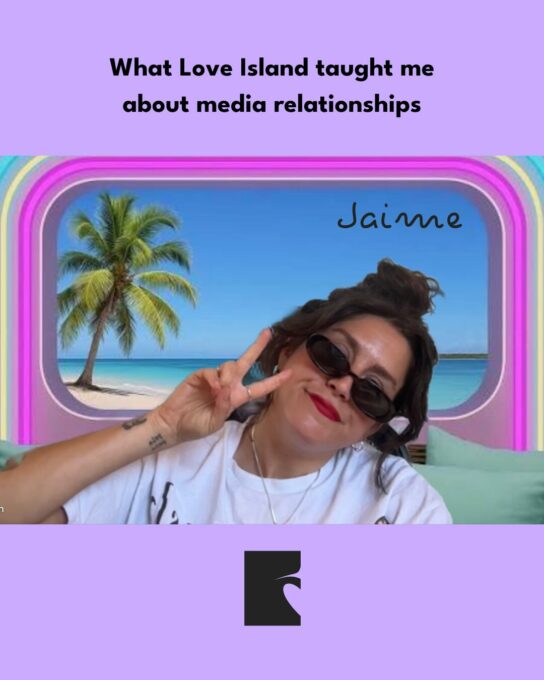
authorJaime Eisen, VP, PR + Strategy
-
dateJuly 8th, 2026
I am a human being living in Canada in 2026, which means I am, of course, watching Love Island.
Actually, that’s an understatement, as I have watched every series of UK, US, and Australia (the Australian one is wildly underrated, by the way).
As you know (because you’re reading this) I also work at a top PR agency, where we leverage our proprietary PoweredPR™ approach to turn cultural insights into stories people actually care about across media relations, digital PR, event management, influencer marketing, content production, and more.
Love Island has certainly been water cooler chat in the Faulhaber office this summer, but it’s more than that. As I’ve watched shirtless men attempt breakfast, witnessed Casa Amor chaos, and heard “I’ve got a text!” approximately one million times, I’ve realized there’s actually a surprising amount our Villa friends can teach us about building better media relationships.
As we approach the finale of this US series, it feels like the perfect time to recap the biggest relationship lessons the villa has taught us, and why every PR professional should probably be taking notes.
Love Island Lesson 1: “I’ve got a text!” isn’t as exciting when you get 1,000 of them a day
On Love Island, everyone stops what they’re doing when someone gets a text. Journalists? Not so much.
According to a recent report from Kickstand, 81% of journalists say they almost always open pitches from contacts they have established relationships with. This matters because Journalists. Are. Drowning. Newsrooms continue to shrink while expectations continue to grow. Reporters are writing more stories, wearing more hats, and receiving more comms than ever. In fact, 67% say they’ve missed stories simply because their inboxes were too full to catch them.
When hundreds—or even thousands—of emails land every day, nobody has time to read everything. Relationships become a shortcut, not because journalists play favourites, but because trust helps them decide where to spend their limited time.
A relevant pitch will always matter. But when it’s sent by someone who consistently understands their beat, respects their inbox, and only reaches out with worthwhile stories? Boom. The goal is to ensure your pitch gets attention like a one-liner from Ian Sterling.
Love Island Lesson 2: Stronger couples do better at challenges (slime and dancing not required)
The strongest couples in the villa are the ones that mutually trust each other, and the same applies here. You’re not going to feel great going into Casa if you’re not on the same page as your partner, and you’re not going to feel great giving a journalist an exclusive unless you establish trust.
Building relationships is about creating a foundation that benefits everyone involved, and over time. When you invest in relationships, conversations become more honest, journalists tell you when an angle isn’t working before you waste time pitching it, and you can let them know that you actually can’t send them X product. You all share your needs and are on the same page. And then they feel confident coming back to you when they need an expert, a source, or context on a developing story.
This leads to faster responses, stronger collaboration and, ultimately, better results for your clients. In other words, relationships aren’t just a “nice-to-have.” They’re a competitive advantage.
Love Island Lesson 3: Even a bombshell still needs good banter
Relationships DO NOT replace good pitches and stories. I repeat: Relationships DO NOT replace good pitches and stories! No journalist is covering weak news because they once grabbed coffee with a publicist.
What relationships do is ensure great stories actually get seen. They create trust that your email is worth opening and confidence that your information will be accurate. Strong relationships must go hand in hand with compelling storytelling. A bombshell wouldn’t get very far without going deep (except maybe Parmida?). To that point, don’t use AI to fake human connection. Journalists can tell the difference, Corbin.
Love Island Lesson 4 : Know their love languages before you pull them for a chat
One of the biggest misconceptions in PR is that relationships begin when you introduce yourself.
They actually begin long before that, when you read a journalist’s work, understand their interests, and genuinely engage with what they cover.
Before you ask someone for coffee, know why you’re asking them. Read their last few articles and pay attention to what they’re into. If they post on social media, interact because you find their work interesting, not because you’re about to pitch them next week.
Then, simply ask. A note saying, “I’ve really enjoyed your recent coverage of X. If you’re open to it, I’d love to grab a coffee and learn more about what you’re working on,” goes much further than disguising a client pitch as a hang.
Just like in the villa, knowing someone’s love language is about showing you paid attention. And in PR, that’s often what separates a cold outreach from the beginning of a genuine relationship.
Love Island Lesson 5: Ask them where their head’s at
Get curious, and make sure your meeting feels like a conversation, not a presentation. Ask what they’re covering, what stories they’re hoping to find, and how they prefer to work. Find out what frustrates them, what excites them and where you can genuinely make their job easier. Listen more than you talk; the relationships that last are built on genuine connection, not transactional networking.
When the meeting ends, jot down a few notes while they’re still fresh. The details they share today could become the foundation of a stronger relationship the next time you reach out.
Love Island Lesson 6: The strongest couples don’t stop talking after the recoupling
Like any successful Love Island couple, the goal is about building a relationship that keeps getting stronger long after the first chat (and hopefully winning over America, and that money).
Don’t stop talking after coverage lands! That’s the equivalent of coupling up on Day 2 and then never speaking again. The best publicists stay in touch, even when they don’t need anything. They congratulate journalists on a great story, share an idea that might be helpful, make an introduction, or simply check in. They follow through on what they promised, become a reliable source, and look for ways to make a journalist’s job easier, not just their own.
Love Island Lesson 7: Don’t be in-Sincere
If there’s one thing this US season has taught us, it’s that people can spot someone who’s there for the wrong reasons (except for Melanie. And Aniya. And Kayda. And Angie. And Fitzy, I guess). The best relationships are built by being genuinely interested in the person on the other side. Journalists know when they’re just another name on a media list, so authenticity matters, as does following through on promises and respecting their time and expertise.
Relationships shouldn’t be about winning, but about building a trust bank on all sides. These Villa kids could learn a thing or two!